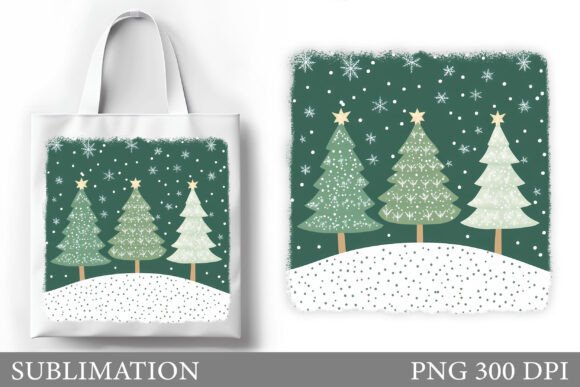
Reviewing Christmas Tree Tote Bag Design Illustrations
As a graphic designer who has spent the last decade refining brand identities and creating marketing visuals for small businesses, I approach every new graphic design asset with a critical eye. It is not just about whether an image looks pretty; it is about whether it functions effectively in a real-world commercial context. Recently, I had the opportunity to review the Christmas Tree Tote Bag Design for a potential client project involving a local boutique preparing for their holiday season launch. My goal was to determine if this specific set of Illustrations could elevate their packaging and social media presence or if it would fall flat against their existing brand identity.
First Impressions and Visual Mood
The first thing that strikes you when opening the files for the Christmas Tree Tote Bag Design is the balance between whimsy and professionalism. In the world of creative design, finding assets that do not feel overly generic or cheaply made is a constant challenge. This particular asset avoids the trap of looking like a basic clipart collection. Instead, it presents itself as a cohesive digital product with a distinct personality. The lines are clean, suggesting high-quality vector origins, which is crucial for scalability.
The mood created by these Illustrations is warm, inviting, and distinctly festive without being cluttered. For a client aiming to project a sense of handmade authenticity, this visual style is ideal. It fits naturally into the aesthetic of a handmade business or a boutique that values artisanal quality. When I placed the design on a neutral background, it immediately established a holiday tone that felt modern rather than dated. This is a significant advantage for brands trying to appeal to contemporary audiences while still honoring traditional seasonal themes.
Versatility in Real Client Projects
The true test of any design asset is its versatility. Can it survive beyond a single use case? In my review, I tested the Christmas Tree Tote Bag Design across various applications to see how it performed. For packaging design, the asset worked exceptionally well. I simulated how it would look on kraft paper bags and rigid boxes, and the contrast held up beautifully. The details were sharp enough to remain visible even when scaled down for smaller labels, which is often a pain point with complex SVG design files.
Beyond physical products, I explored its potential in social media graphics. For Instagram posts and Pinterest pins, the design served as a strong hero graphic. It allowed for ample negative space, making it easy to overlay text for promotional campaigns. I also considered its use in print-on-demand scenarios. Whether applied to t-shirts, mugs, or actual tote bags, the composition remained balanced. For Cricut users and crafters, the clean paths in the vector files mean that cutting vinyl or heat transfer material would be straightforward, reducing waste and production time.
Furthermore, this asset is not limited to retail products. It can enhance editorial design for holiday newsletters or serve as a decorative element in web design headers. The flexibility of the Christmas Tree Tote Bag Design makes it a valuable addition to any designer’s toolkit, particularly those working with Etsy product sellers who need consistent visuals across their shop banners, product listings, and thank-you cards.
Strategic Placement and Visual Hierarchy
Understanding where to place a clipart or illustration is just as important as the quality of the file itself. The Christmas Tree Tote Bag Design shines best in large layout areas where it can breathe. Using it as a central focal point on a product mockup allows the viewer to appreciate the intricate details. It works wonderfully for hero graphics on landing pages or as the primary visual on holiday flyers and invitations.
However, designers must exercise caution. This asset should be used carefully in crowded layouts. Because the design has a certain visual weight, placing it alongside busy patterns or heavy typography can disrupt the visual hierarchy. It is not suitable for minimalist corporate materials where the brand identity relies on stark simplicity and sans-serif precision. In such cases, the organic nature of the tree illustration might clash with the rigid structure of the brand. Additionally, avoid using it on low-contrast backgrounds where the finer lines might get lost, compromising readability and professional appearance.
Impact on Brand Consistency and Trust
When integrating the Christmas Tree Tote Bag Design into a broader campaign, consistency is key. The design helps build emotional appeal and audience engagement by triggering nostalgic holiday feelings. This emotional connection can enhance brand identity and foster customer loyalty. However, it must align with the overall tone of the small business branding. If a brand typically uses sleek, futuristic aesthetics, this rustic or hand-drawn style might confuse the audience. But for brands rooted in warmth, community, and tradition, this asset reinforces trust and recognition.
Practical Designer Notes for Commercial Use
Before delivering any final files to a client, I always run a series of technical checks. Here are my practical notes for anyone considering the Christmas Tree Tote Bag Design for a commercial project:
- Test in Black and White: Convert the design to grayscale to ensure the shapes remain distinct without color reliance. This is crucial for single-color printing methods like screen printing or embossing.
- Check Contrast: Preview the asset on both light and dark backgrounds. Ensure that the lines do not disappear against mid-tone colors, which can happen with subtle PNG design transparency issues.
- Scale Testing: Resize the illustration from a large poster format down to a small sticker label. Verify that the details do not become muddy or pixelated. High-quality SVG design files should scale infinitely without loss of quality.
- Mockup Validation: Always place the design on real-world product mockups. Seeing it on a curved surface like a mug or a textured surface like a canvas tote reveals how the design interacts with physical materials.
- Font Pairing: Experiment with different typefaces. I found that pairing this illustration with a clean sans serif font creates a modern look, while a script font or handwritten font enhances its handmade charm. Avoid overly ornate display font styles that might compete with the illustration’s details.
- Licensing Verification: Always confirm the commercial license terms. Ensure that the usage rights cover your specific client needs, whether it is for digital ads, physical merchandise, or resale as part of a design bundle.
In conclusion, the Christmas Tree Tote Bag Design is a robust and versatile illustration that holds up well under professional scrutiny. It offers a blend of aesthetic appeal and functional flexibility that is rare in standard creative marketplace offerings. For designers working on holiday campaigns, sublimation design projects, or Canva template creations, this asset provides a solid foundation for creating polished, engaging, and commercially viable designs. By following careful placement strategies and technical checks, you can ensure that this digital product enhances rather than detracts from your client’s brand story.