Reviewing 3D Christmas Bow Clipart for Embroidery
As a designer who has spent countless hours digitizing and stitching out holiday motifs, I have learned that not every graphic translates well to thread. When I first pulled up the 3D Christmas Bow Clipart on my screen, my initial reaction was one of cautious optimism. The visual depth suggested by the shading and perspective is striking in a digital format, but my immediate concern was how those subtle gradients would hold up under the needle. For embroidery designers, small business owners, and Etsy sellers, the gap between a crisp digital illustration and a tangible stitched product is where profits are either made or lost.
First Impressions and Visual Personality
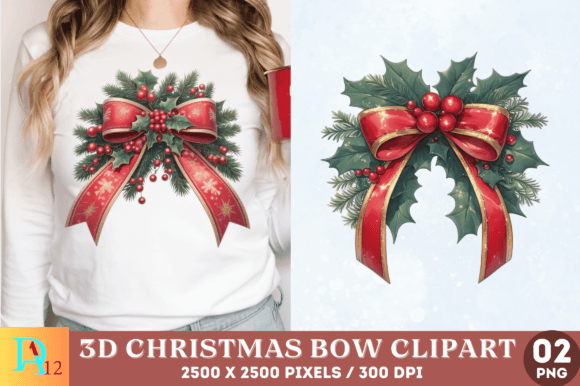
The mood created by this design is unmistakably festive yet sophisticated. Unlike flat, cartoonish bows that can sometimes look juvenile on high-end apparel, this clipart carries a sense of volume and realism. The layout suggests a classic ribbon structure with looping tails and a central knot, rendered in a way that implies light and shadow. For a crafter or boutique owner, this visual personality is crucial. It signals quality. When a customer sees a bow that looks three-dimensional, they perceive the underlying handmade product as having higher value.
However, from a technical standpoint, "3D" in a digital file does not mean actual 3D puff embroidery unless specified. In this context, it refers to the artistic rendering. My job as a reviewer is to determine if this artistic intent can be replicated using standard machine embroidery design techniques. The detail level appears moderate, which is generally a good sign. Overly complex details often turn into a mess of thread breaks and bird nests, while too little detail looks cheap. This design seems to strike a balance, offering enough complexity to be interesting without demanding impossible precision from home embroidery machines.
Real-World Application: The Holiday Tote Bag Test
To truly evaluate the 3D Christmas Bow Clipart, I mentally placed it on a few common projects. Let’s consider a custom embroidered tote bag, a staple for any craft business during the holiday season. A canvas tote provides a stable, medium-weight fabric that handles stitch density well. Placing this bow design on the corner of a bag, perhaps accompanied by simple monogramming, creates an elegant holiday embroidery accent. The perceived depth of the bow would pop against the flat texture of the canvas, drawing the eye immediately.
I also considered its use on a fleece sweatshirt. Here, the challenge changes. Fleece is thick and plush. If the embroidery file relies heavily on fine running stitch outlines to define the edges of the ribbon, those lines might get lost in the pile of the fabric. However, if the design utilizes wider satin stitch columns for the main body of the bow, it would sit beautifully on top of the fleece, creating a tactile contrast that customers love. This versatility makes it a strong candidate for custom apparel lines, provided the digitizer has accounted for fabric pull.
Navigating Fabric and Hoop Constraints
While the design is visually appealing, there are specific scenarios where caution is required. Small hoop sizes present the first hurdle. If you are working with a 4x4 inch hoop, you must ensure the design scales down without losing its defining characteristics. Tiny corners and intricate overlaps in the ribbon tails can become dense clumps of thread if the stitch density is not adjusted. For baby embroidery items, such as onesies or bibs, simplicity is key. A smaller version of this bow could work wonderfully, but only if the internal detailing is simplified to prevent stiffness.
Fabric texture and type also play a pivotal role. On thin or stretchy fabrics, such as jersey knits or silk blends, a dense fill stitch background or heavy satin areas can cause puckering. This is where proper stabilization becomes non-negotiable. Using a cut-away stabilizer for knit garments or a tear-away for woven cottons will help maintain the integrity of the finished product. Additionally, when stitching on dark fabrics, the choice of thread colors becomes critical. The "3D" effect relies on contrast between light and shadow. If you are stitching a red bow on a black shirt, you may need to introduce a darker maroon or even a subtle grey thread to mimic the shadows, rather than relying solely on the default colorway of the clipart.
Commercial Viability and Brand Consistency
For Etsy sellers and digital product creators, the appeal of this design extends beyond the physical stitch. It serves as a powerful asset for marketing. A high-quality printable mockup featuring this bow can significantly boost click-through rates. Customers buy with their eyes first. If the Illustrations used in your shop listings look professional and cohesive, it builds trust. This particular clipart fits well within a brand aesthetic that values tradition and warmth. It is not overly modern or abstract, making it safe for a wide demographic, from grandparents buying gifts to young parents looking for nursery decor.
When considering commercial embroidery projects, such as corporate holiday gifts or boutique branding, consistency is vital. This design can be paired with other elements from the same collection to create a unified look across different products. Imagine an embroidered patch for a staff uniform hat, matching tea towels for a kitchen set, and pillow covers for home decor. Using the same bow motif ties these disparate items together, enhancing the perceived professionalism of your small shop product line.
Practical Designer Notes for Best Results
Before you commit to stitching this design on a client’s garment, follow these practical steps to ensure success. First, always test the design on scrap fabric that matches the weight and weave of your final material. This allows you to check for tension issues and thread breaks. Second, review the stitch sequence. A well-digitized file will stitch the underlay first to secure the fabric, followed by the main shapes. If the design lacks proper underlay, it may shift during stitching.
Check the license terms carefully. Just because you have purchased the digital embroidery file does not automatically grant you the right to resell the design itself. Most licenses allow you to sell the personalized gift or physical item you create, but not the file. Confirm this before listing items on your store. Finally, inspect the small details. Zoom in on the digital preview. Are there any stray stitches or overlapping paths that could cause jams? A quick cleanup in your embroidery software can save hours of frustration later.
In conclusion, the 3D Christmas Bow Clipart is a promising addition to any holiday design library. It offers a blend of classic charm and visual depth that, when executed with care, can elevate simple fabrics into cherished keepsakes. By respecting the limitations of your machine and fabric, and by paying attention to stitch density and stabilization, you can transform this digital asset into a standout feature of your seasonal collection. Whether for a cozy sweatshirt embroidery project or a chic tote bag design, this bow has the potential to delight customers and enhance your brand’s reputation for quality craftsmanship.