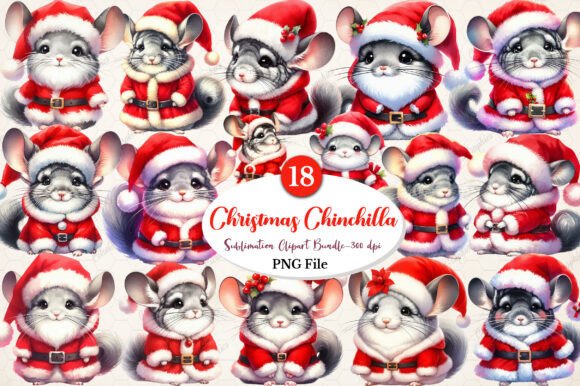
Reviewing Watercolor Christmas Chinchilla Clipart for Embroidery
As a designer who spends more time staring at stitch simulations than I do sleeping, I have learned to be skeptical of digital assets that promise charm but deliver complexity. When I first pulled up the Watercolor Christmas Chinchilla Clipart, my initial reaction was one of cautious optimism. The aesthetic is undeniably sweet—soft edges, festive hues, and that distinctively round, fluffy silhouette that defines a chinchilla. But charm does not always translate to thread. My job is to determine if this visual appeal survives the transition from screen to fabric, specifically for those of us running small shops or crafting personalized gifts.
The Visual Personality and First Impressions
The mood of this design is gentle and whimsical. It avoids the harsh, cartoonish outlines often found in cheaper clip art, opting instead for a softer, painterly approach. For an embroidery project, this presents both an opportunity and a challenge. The lack of hard borders means the design relies heavily on color blocking and contrast to define its shape. In a digital illustration, this looks dreamy. In embroidery, it requires careful planning. If you are an Etsy seller or a hobbyist looking to create holiday embroidery that stands out from the generic snowflakes and reindeer, this asset offers a unique niche. It feels modern yet nostalgic, perfect for boutique branding where uniqueness drives buyer engagement.
Real-World Application: The Holiday Sweatshirt Test
To truly evaluate the Watercolor Christmas Chinchilla Clipart, I mentally walked through a common real-life scenario: creating a custom holiday sweatshirt for a client’s child. Sweatshirts are forgiving due to their thickness, but they also demand clarity. A muddy design gets lost in the fleece texture. Here, the chinchilla’s rounded form works in our favor. Large, open areas allow for smooth fill stitches, which sit well on textured fabrics. However, the "watercolor" aspect implies gradient-like transitions. In embroidery, we cannot simply print a gradient; we must simulate it with thread colors. This means selecting a palette of three to four complementary shades to create depth without making the design look pixelated or overly dense.
If you are producing this as a handmade product, consider the scale. On a adult-sized sweatshirt, the design can breathe. On a baby onesie, you must ensure the details do not become so small that they turn into a stiff patch of thread. The key is maintaining the softness of the original illustration while ensuring the stitch density remains comfortable against sensitive skin.
Fabric Considerations and Stitching Clarity
Not all fabrics treat this design equally. When working with thin or stretchy fabric, such as a lightweight t-shirt or a jersey knit, the stability of the design becomes paramount. The Watercolor Christmas Chinchilla Clipart likely contains areas of moderate detail. Without proper stabilization, these areas can pucker, distorting the cute expression of the chinchilla. I strongly advise using a cut-away stabilizer for garments that will be washed frequently. For tote bags or canvas aprons, a tear-away might suffice, but test it first. The fabric texture plays a huge role here; a rough linen might break up the fine details, whereas a smooth cotton poplin will render the shapes crisply.
Dark fabrics present another hurdle. If the chinchilla features light pastel tones typical of watercolor styles, stitching them directly onto black or navy fabric will result in poor visibility. You have two options: use an underlay of white thread to boost brightness, or choose a lighter garment color. Always test your thread colors against the fabric background before committing to the final piece. A quick black-and-white mockup can also reveal if the contrast is sufficient for the design to read clearly from a distance.
Commercial Viability and Brand Consistency
For small business owners and craft entrepreneurs, the question is not just "does it look good?" but "will it sell?" This design fits seamlessly into the current trend of cozy, cottage-core holiday aesthetics. It appeals to buyers looking for something different than traditional red and green motifs. Using this as a central element for embroidered patches, pillow covers, or kitchen towels can elevate your small shop product line. It suggests attention to detail and a curated eye, which builds customer trust.
However, professionalism lies in the execution. If you are selling this as a finished product, ensure the stitching is clean. Trim jump threads meticulously. If you are selling it as a digital embroidery file, provide clear instructions on recommended hoop sizes and stabilizer types. Buyers appreciate guidance. Remember, a happy customer returns; a customer who receives a puckered, unclear design does not. The visual appeal of the Watercolor Christmas Chinchilla Clipart can drive initial clicks, but the quality of the stitched finished product drives reviews and repeat business.
Practical Designer Notes for Best Results
Before you load this design into your machine, take a moment to review the technical specifics. Since exact file formats and stitch counts are not provided here, you must check the source files yourself. Look for formats compatible with your specific machine. Check the stitch density; if it is too high, reduce it slightly to prevent fabric stiffness, especially for baby embroidery or items meant for daily wear.
- Test on Scrap Fabric: Never skip this step. Use the same fabric and stabilizer combination you plan to use for the final item.
- Check Thread Contrast: Ensure your thread colors distinguish the chinchilla from the background elements. Subtle shifts in shade can get lost in stitching.
- Hoop Size Matters: Confirm the design fits comfortably within your hoop with room for margins. Crowding the edge can cause hoop burns or misalignment.
- Licensing Verification: If you are an Etsy seller or run a craft business, confirm the license terms. Can you sell the stitched items? Can you resell the digital file? Always respect intellectual property rights.
- Simplify if Necessary: If the watercolor effect relies on tiny, intricate details, consider simplifying the design for smaller hoop sizes or curved surfaces like caps.
Final Thoughts on Usage
The Watercolor Christmas Chinchilla Clipart is a delightful addition to your library of design assets, provided you approach it with a designer’s eye. It is not a plug-and-play solution for every situation. It thrives on stable, medium-to-heavy weight fabrics where its soft shapes can be rendered with smooth satin or fill stitches. It struggles on dark, thin, or highly textured materials without significant adjustment. By treating it as a starting point for creative problem-solving rather than a final answer, you can create stunning holiday embroidery, personalized gifts, and commercial products that resonate with customers. The magic is not just in the image, but in how you translate that image into thread.