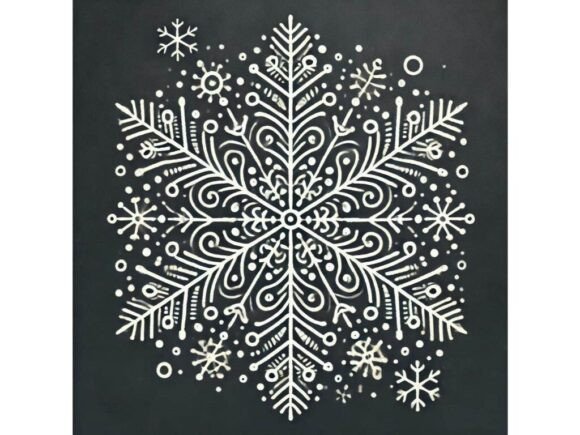
Reviewing A Charcoal Sketch of Christmas Snowflake
As a designer who spends half my life staring at stitch maps and the other half managing client expectations, I have learned that not every pretty image translates well into thread. When I first pulled up A Charcoal Sketch of Christmas Snowflake, my initial reaction was one of cautious optimism. The aesthetic is distinct—moving away from the hyper-saturated, cartoonish holiday graphics we often see in December catalogs and leaning into something more organic and textured. For those of us running small shops or creating handmade products, this shift toward subtle, artistic visuals can be a powerful differentiator.
The Visual Personality and First Impressions
This design falls squarely into the category of Illustrations rather than traditional geometric embroidery patterns. The "charcoal" effect suggests a softness, a slight graininess that mimics the look of dry media on paper. In a digital preview, this looks stunning. It creates a mood that is cozy, nostalgic, and understated. However, translating that charcoal texture into an embroidery file requires careful consideration of stitch types. If the digitizer relied too heavily on dense fill stitches to create shading, the result could be stiff and board-like. If they used clever running stitch work or varied stitch density to mimic the sketch lines, the outcome will be fluid and elegant.
The snowflake itself is likely asymmetrical or organically shaped, avoiding the perfect six-point symmetry of clip-art snowflakes. This irregularity is what gives it character, but it also presents challenges for placement. It feels like a design that belongs on high-quality cotton, linen, or heavy-weight fleece rather than shiny satin or thin polyester.
Real-World Application: The Holiday Tote Scenario
To truly evaluate A Charcoal Sketch of Christmas Snowflake, I imagined a specific project: a custom holiday tote bag for a boutique client. She wanted something that felt artisanal, not mass-produced. I visualized placing this design on a natural canvas tote, using off-white or light gray thread colors to maintain that sketched, monochromatic vibe.
In this scenario, the design performs beautifully because it doesn’t scream for attention; it invites closer inspection. Customers browsing an Etsy seller’s shop often scroll past loud, busy designs. A subtle, artistic snowflake stops the eye because it looks like a piece of art rather than a logo. For a craft business, this means higher perceived value. It suggests that the maker has taste and curates their design assets carefully.
However, if I were moving this same design to a dark navy sweatshirt, I would need to adjust my strategy. The charcoal effect relies on contrast. On dark fabric, I might need to use a lighter gray or even a metallic silver thread to ensure the "sketch" lines don’t disappear into the background. This is where testing becomes non-negotiable.
Technical Considerations for Embroiderers
Before loading this into your machine, there are several practical factors to review. Since this is an illustrative style, pay close attention to the stitch density. High-density areas in a sketch-style design can cause puckering, especially on lighter fabrics. Always use a proper stabilizer—I recommend a medium-weight cut-away for garments that will be washed frequently, like sweatshirt embroidery or baby embroidery items.
- Fabric Texture: This design will look best on fabrics with a bit of tooth. Smooth, slippery fabrics may not hold the nuanced lines of a charcoal sketch as well as canvas or denim.
- Hoop Size: Check the dimensions of the embroidery file. If the snowflake is large, ensure your hoop can accommodate it without distorting the garment. For smaller hoops, verify that the fine details remain clear and do not merge into a blob of thread.
- Thread Choice: Matte threads, such as cotton or rayon, often work better for sketch-style designs than glossy polyester, which can look too shiny and artificial against a matte aesthetic.
If you are considering this for an applique design base, note that the intricate edges of a snowflake might be difficult to cover neatly with fabric unless the applique piece is cut very precisely. For most users, standard stitching will yield a cleaner result.
Commercial Viability and Product Fit
For commercial embroidery projects, versatility is key. A Charcoal Sketch of Christmas Snowflake fits well into several niches:
- Personalized Gifts: Pair it with a name in a simple serif font for a classy holiday ornament or pillow cover.
- Boutique Branding: Use it as a subtle chest logo on staff uniforms for winter-themed cafes or shops.
- Home Decor: It works exceptionally well on tea towels or table runners where the artistic style complements a rustic or farmhouse aesthetic.
Be cautious when using this on curved surfaces like caps. The detailed lines of a sketch can distort if the fabric pulls too much during stitching. Always test on a scrap piece of the actual material you intend to use. This is crucial for maintaining professionalism and ensuring your finished product meets customer expectations.
Final Designer Notes
Ultimately, A Charcoal Sketch of Christmas Snowflake is a strong contender for designers looking to elevate their holiday offerings. It moves beyond the generic and offers a touch of sophistication. However, success depends on execution. Do not assume the digital preview matches the stitched output perfectly. Run a test stitch-out. Check how the thread colors interact with your specific fabric. Ensure you have the right license if you plan to sell items made with this digital embroidery file.
For the small shop product line, this design offers a fresh alternative to traditional holiday motifs. It appeals to buyers who value craftsmanship and subtlety. By treating it as a piece of art rather than just a decoration, you can create custom apparel and gifts that feel personal and thoughtful. Just remember: the beauty of a charcoal sketch lies in its imperfections and texture, so let your stitching breathe and avoid over-tightening your tension.